Innovation project · designed end to end · 2026

The umpire clicker,
finally smart

The wheel indicator an umpire holds behind the plate has not changed in decades. Still the good old mechanical indicator.

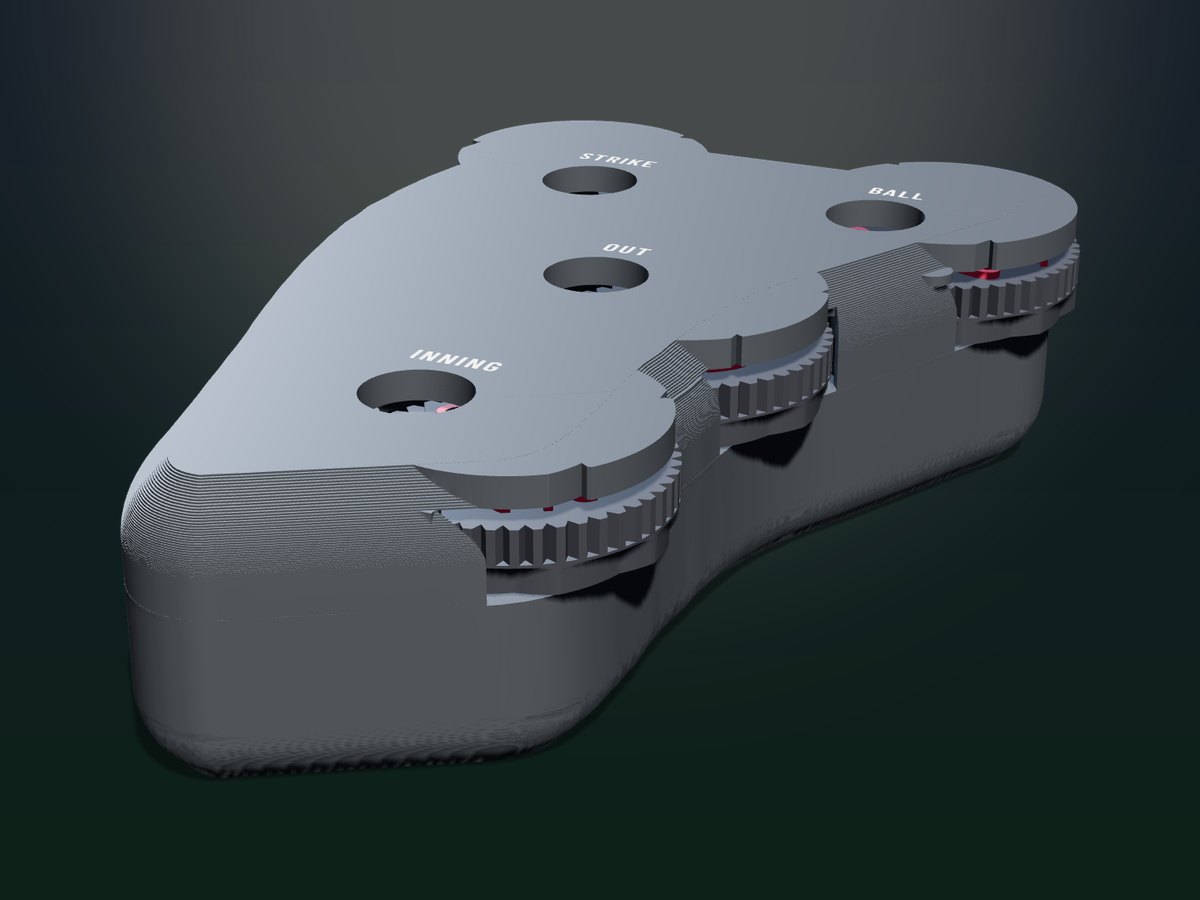
Now it is time to innovate, and to introduce the new umpire indicator: it keeps exactly the same gesture, but it is now smart.

The count of balls, strikes, outs and innings goes to the scoreboard and online, and the umpire changes nothing about how he works.

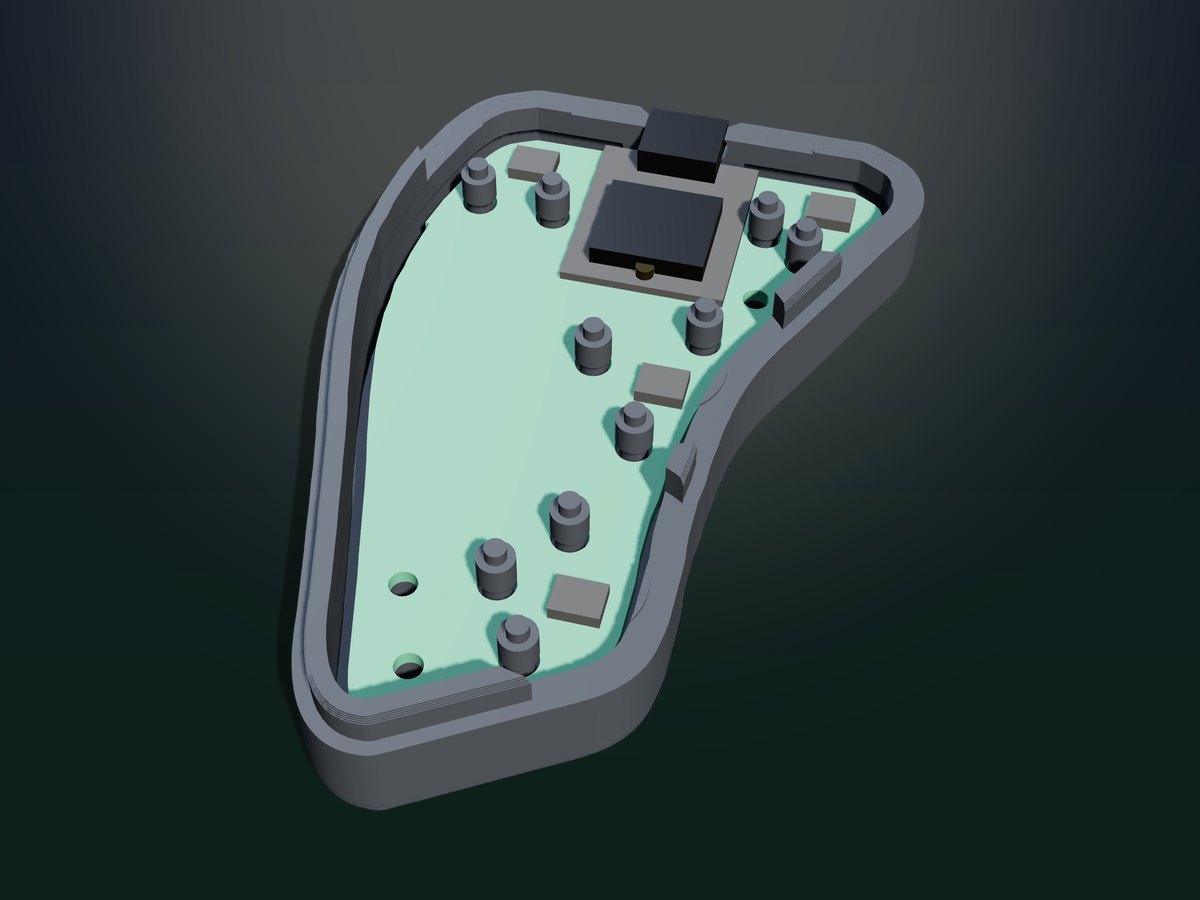
Enclosure, circuit board, mechanics and software: everything here was designed, verified and put into production for this project.

The passion for baseball will always be in us. We want to pass it on to the next generation!

Patrice Eugène, P.Eng.

▶ Watch the 3D presentation● Live count🖱 Try the clicker⚾ Umpire Quiz🧑‍⚖️ Ask Mr. Umpire🎮 Call the Game Like an Umpire

Presentation video
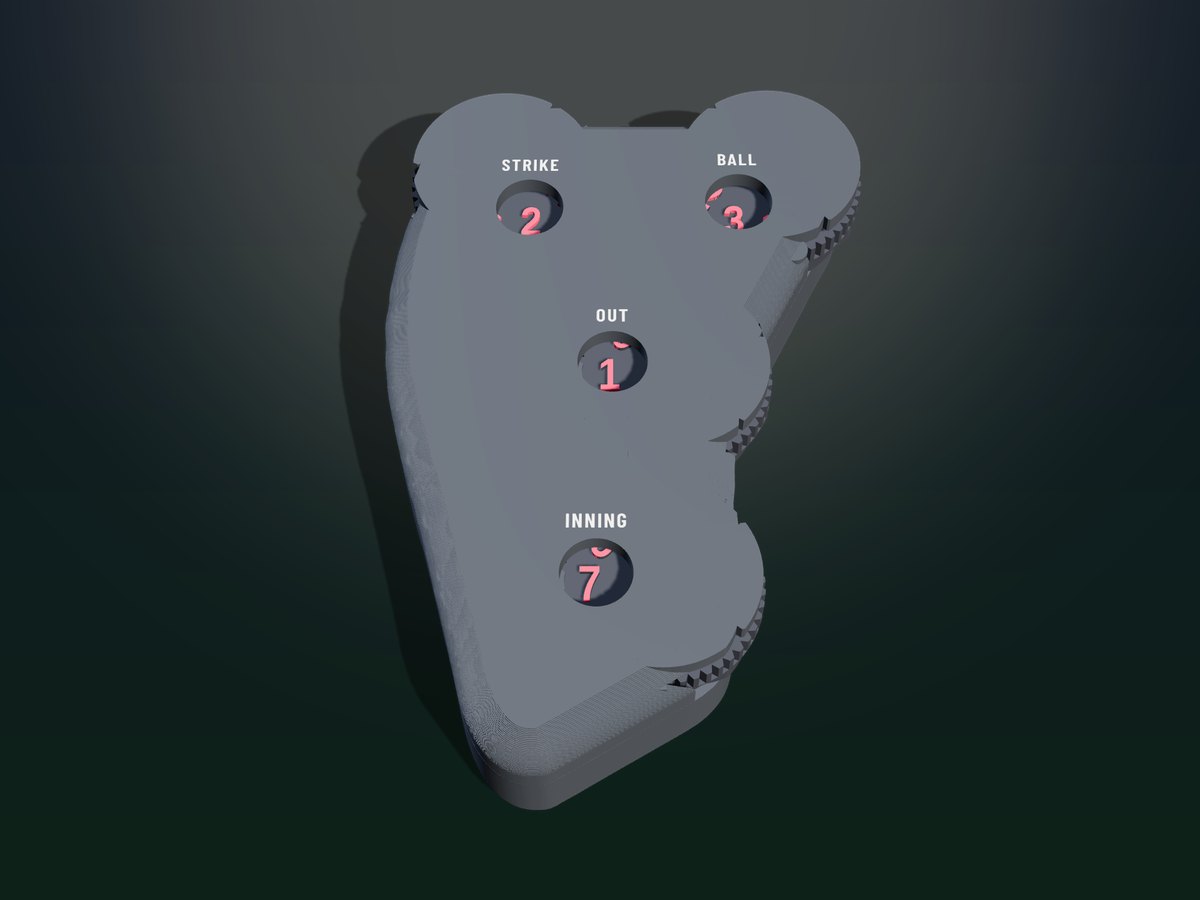
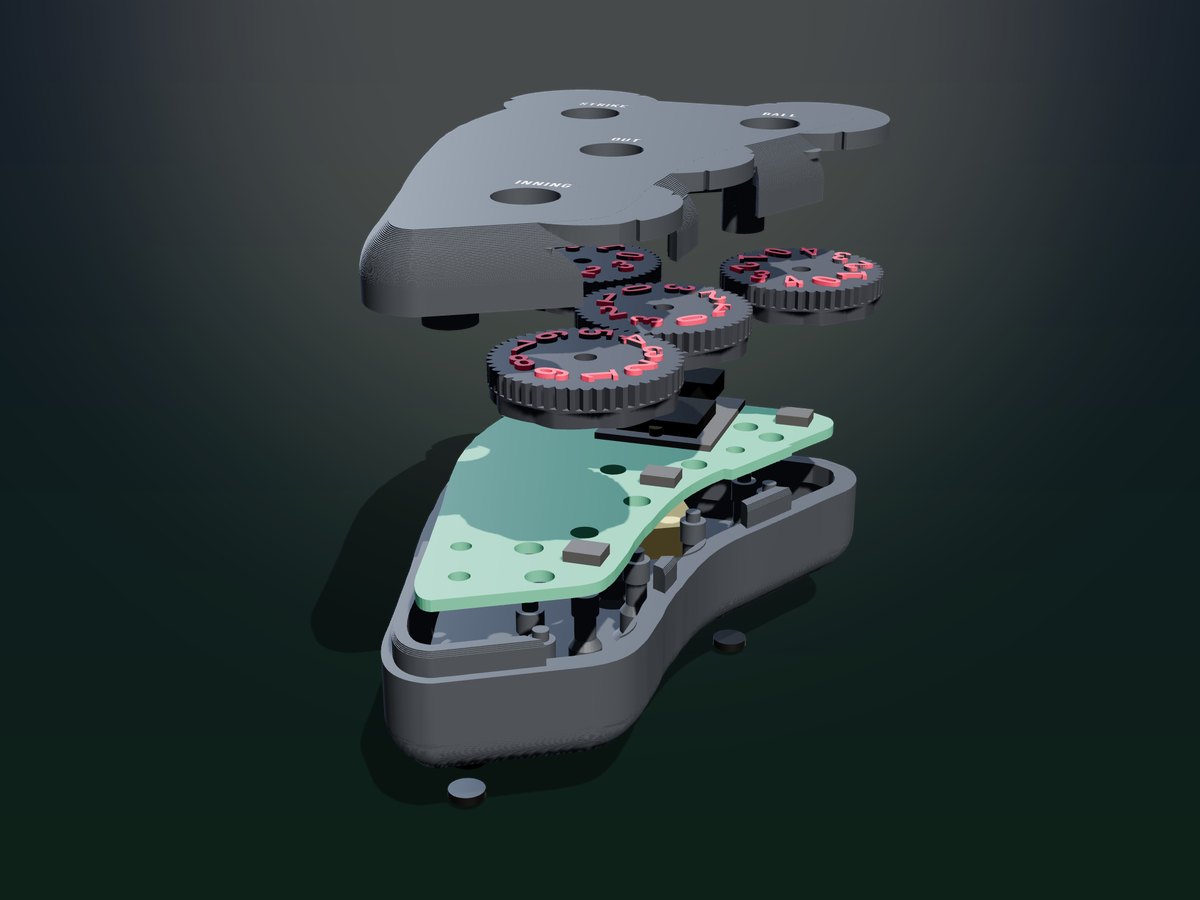
The closed clicker, three-quarter view Top of the clicker, four windows Inside the clicker, cover and wheels removed Exploded view of the clicker

The video: the story of the umpire indicator and the new smart clicker, all the way to the field.
01HISTORY

From 1870 to today

The umpire indicator is almost as old as professional baseball. The first ball-and-strike counters appear in the 1870s and 1880s; the two-dial celluloid model sold from 1886-1887 already carried patents from 1878 and 1886. One 1887 example counts up to 5 balls and 4 strikes — that season, those were the rules.1

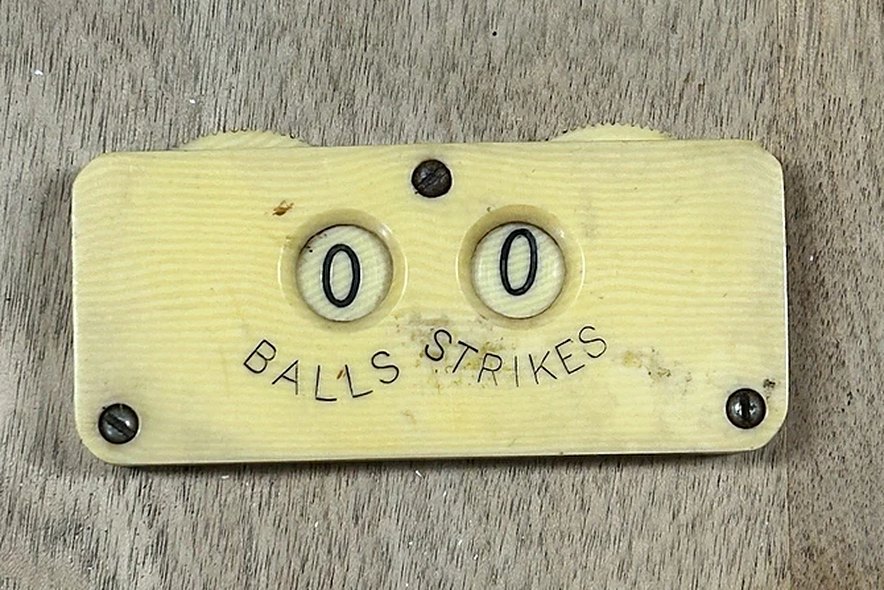
Vintage ivory celluloid indicator with two dials, BALLS and STRIKES, both at zero
The original form: two dials, two windows, two words — BALLS and STRIKES. Nothing for outs or innings. Same form as the 1887 example held by the Hall of Fame.
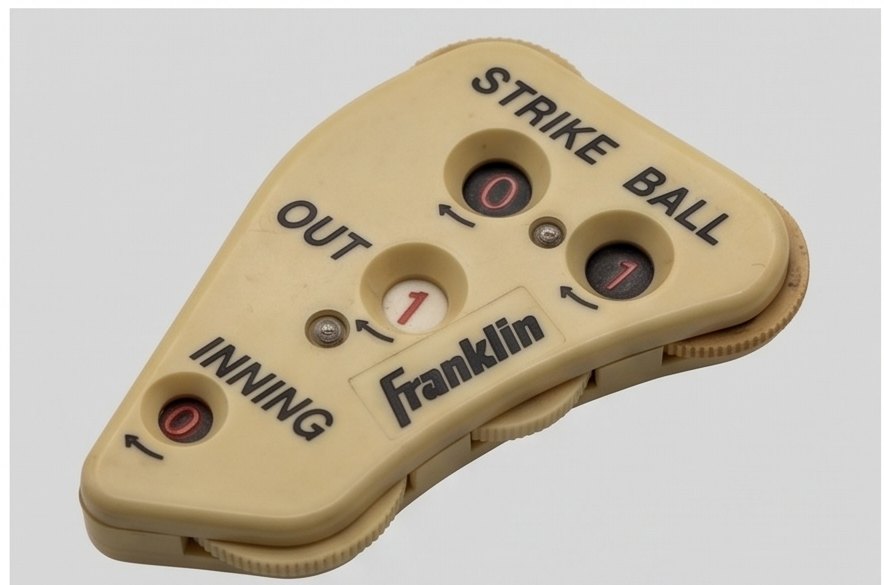
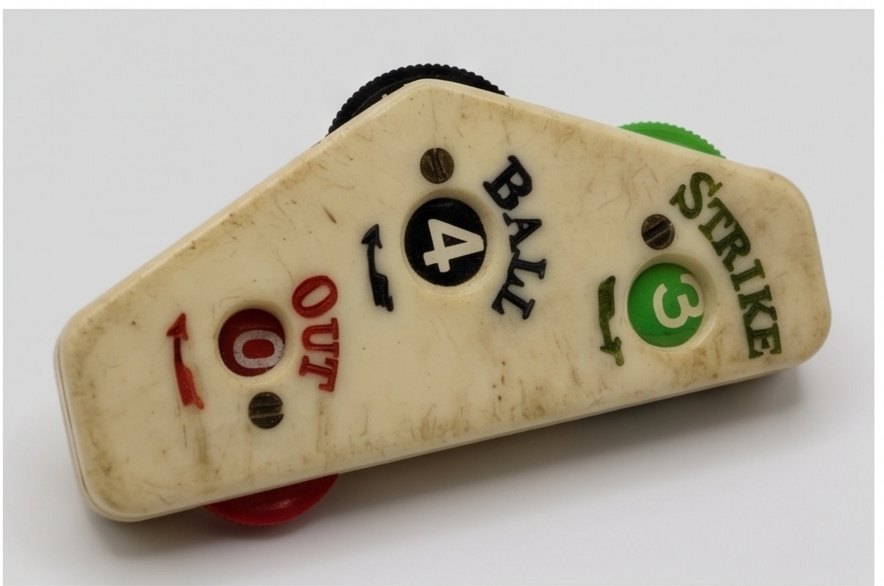
Vintage ivory plastic indicator with three dials
Three dials, three windows, and arrows moulded in to show which way they turn.
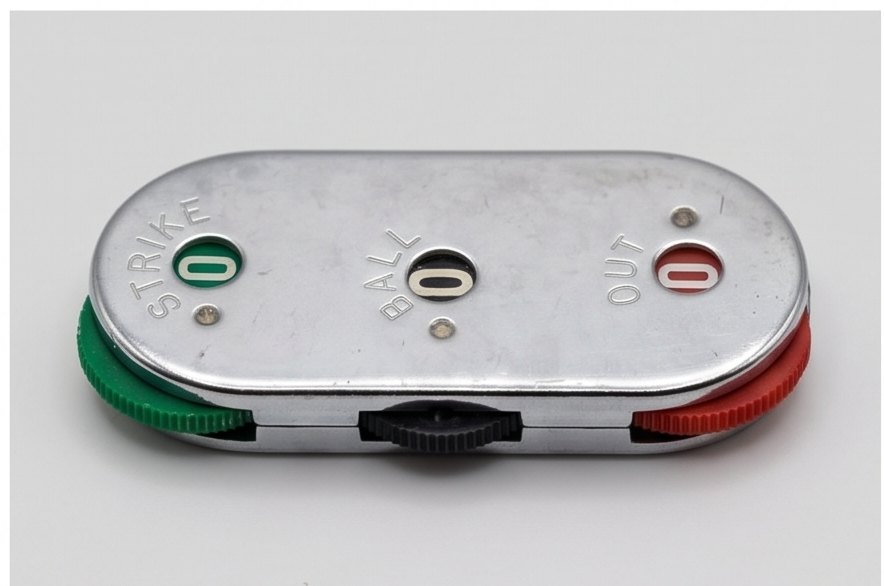
Chrome metal indicator with three dials
A chrome-plated body worn by the seasons: strikes, balls, outs.

Umpire Bill Betts is also credited, in the 1890s, with the pocket indicator adopted by the National League in 1895. Nothing has changed since: a small case in the palm, detented dials along the sides, digits in windows, and a click you feel under the thumb without taking your eyes off the play.

Four-dial indicator, one of them for innings
The latest addition: a fourth dial for innings.
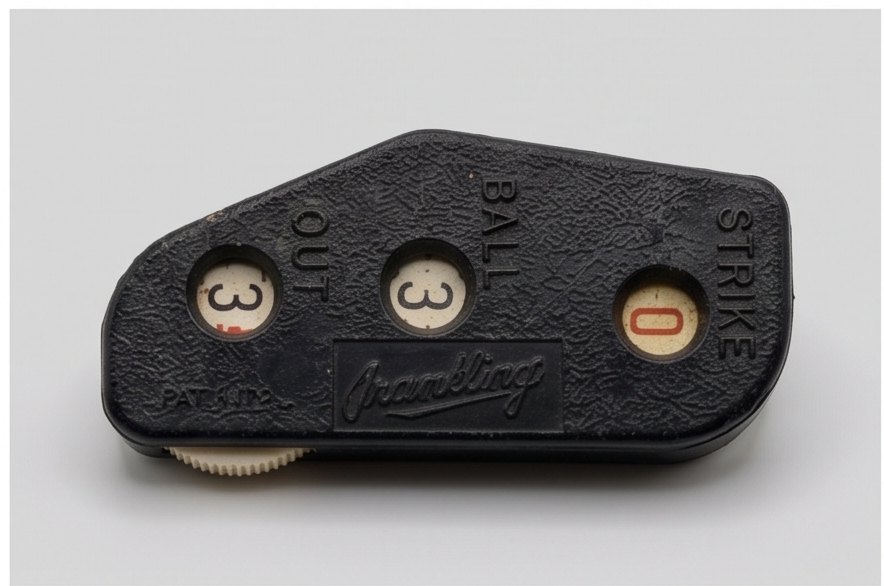
Black three-dial indicator
Same silhouette, different material: the black plastic of recent decades.

Materials changed — celluloid, then metal, then plastic — and a dial or two was added. That is all. In more than 140 years the object has lived through radio, television, electronic scoreboards and live statistics without ever sending its data online over the Internet. That is exactly what this project fixes.

  1. National Baseball Hall of Fame and Museum (Cooperstown), “Umpire indicator, 1887”, accession no. B-312-64: Spalding celluloid indicator, patents of May 28, 1878 and October 12, 1886, dials going up to 5 balls and 4 strikes. collection.baseballhall.org ↩
02THE PRODUCT

From an object I know by heart to one that speaks

A baseball umpire counts strikes, balls, outs and innings on a wheel indicator held in one hand.

Its one flaw was never fixed: it talks to no one. What the umpire sets in his hand, the scoreboard never learns, nor does the scorer, nor do the fans, let alone the parents in the stands.

This project keeps the shape and the gesture of the original, and adds what it was missing. The position shown in the window is the one the electronics read: a change is recognised in the hand and sent to the scoreboard. The umpire changes nothing about how he works.

BALLS3STRIKES2OUTS1INNING73-21 · 7 The umpire turnsthe wheel The scoreboardupdates itself Parents followthe count online
Nothing changes for the umpire: the same gesture behind the plate, and the count reaches the scoreboard and the phones on its own.

Model A Proof of concept (PoC) fully workingNext step: DFM / DFA (Design for Manufacturing & Assembly)

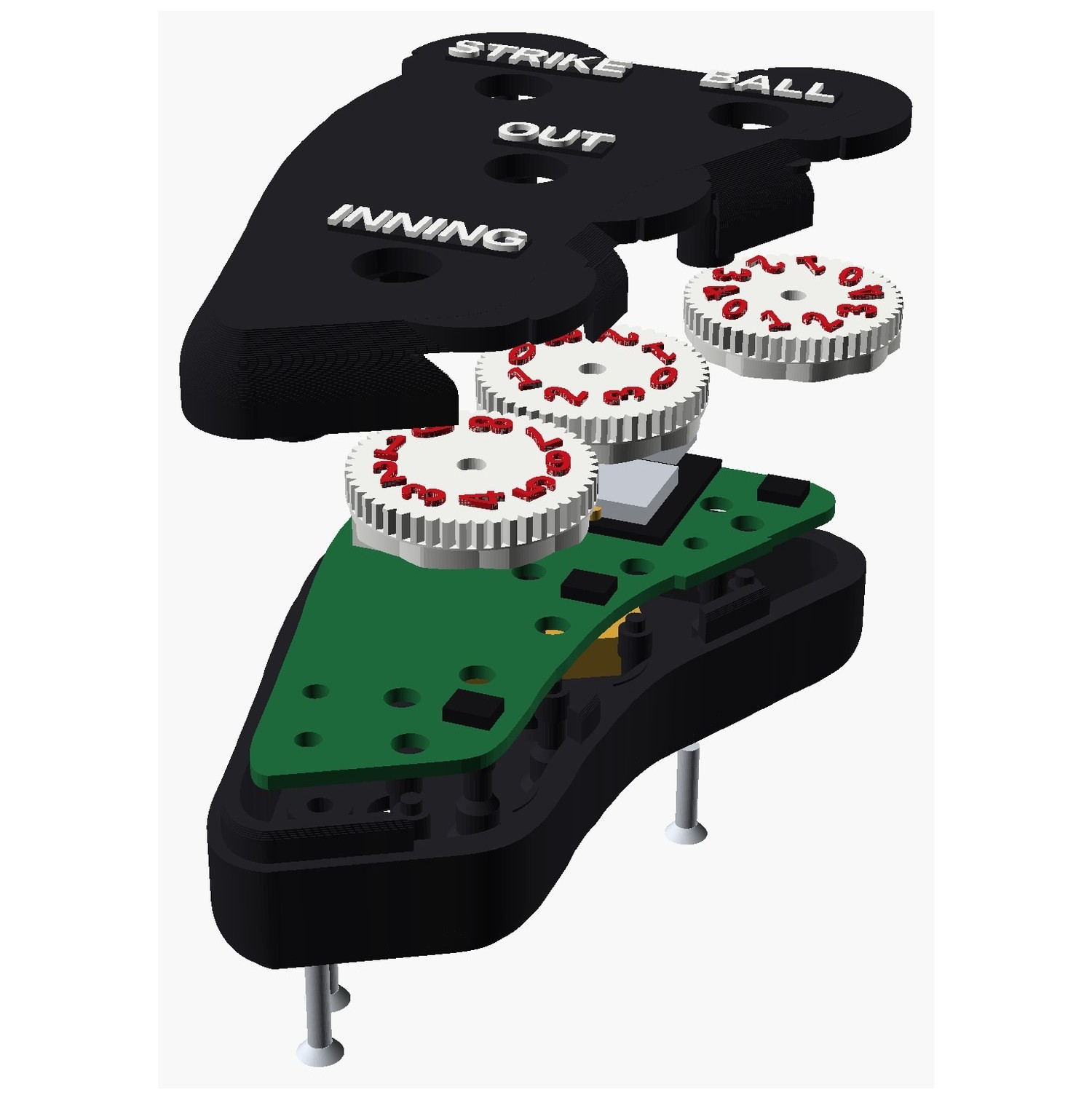
Exploded view of Model A
Model A assembly, bottom to top: shell and screws, circuit board, wheels, lid.
03ABOUT

About

Patrice Eugène, P.Eng. is first and foremost a baseball fan. The passion goes back to the years he played on a minor baseball team in his neighbourhood while also working as a baseball umpire, more than 5 years combined, in the early 2000s. An engineer based in Montreal (Quebec), Canada, he has a taste for objects where mechanics, electronics and software all have to land together. What interests him is not the technical demonstration, but the moment an object is picked up and works without instructions.

He takes his projects end to end: drawing and printing the parts, the circuit board, the embedded software, then the fabrication packages and the back-and-forth with the shops. He writes his models in code rather than with a mouse, and backs every step with verification scripts, because a defect found on screen costs a minute and the same defect found on the assembly table costs a production run.

The Umpire Clicker comes from his years as an umpire: an object he held every game, perfect for the thumb and silent about everything else. Seven versions later, it fits in the same hand, and it talks to the scoreboard.

For a project, a question or a collaboration: info@umpireclicker.com.